Solar CCTV for Remote Sites That Stays Reliable
Solar CCTV for remote sites needs to work through winter, poor weather and extended periods without maintenance. Here's what makes a solar surveillance system genuinely dependable.
Solar CCTV for Remote Sites That Stays Reliable
A gate left open at a compound, fuel taken from a plant yard or fly-tipping beside a rural access road can cause damage long before anyone notices it. Solar CCTV for remote sites gives you a practical way to watch vulnerable areas where mains electricity and fixed broadband are unavailable, costly or simply impractical.
For farms, construction projects, storage yards, vacant property, estates and temporary works, the right system can provide visible deterrence, live viewing and recorded evidence without relying on a nearby power supply. The key is not merely placing a camera on a pole — it is designing a complete system around the site, its risks and the conditions it will face all year round.
Why Remote Sites Need a Different CCTV Approach
A conventional CCTV installation benefits from fixed power, reliable internet and a building to protect the equipment. Remote locations often have none of these advantages. They may be exposed to poor weather, changing light, restricted vehicle access and determined trespassers who know that a site is unattended overnight.
Rather than asking which camera has the longest specification sheet, a site owner should ask what needs protecting, when incidents are most likely to occur and how quickly footage or alerts need to be accessed.
What Makes Solar CCTV for Remote Sites Dependable
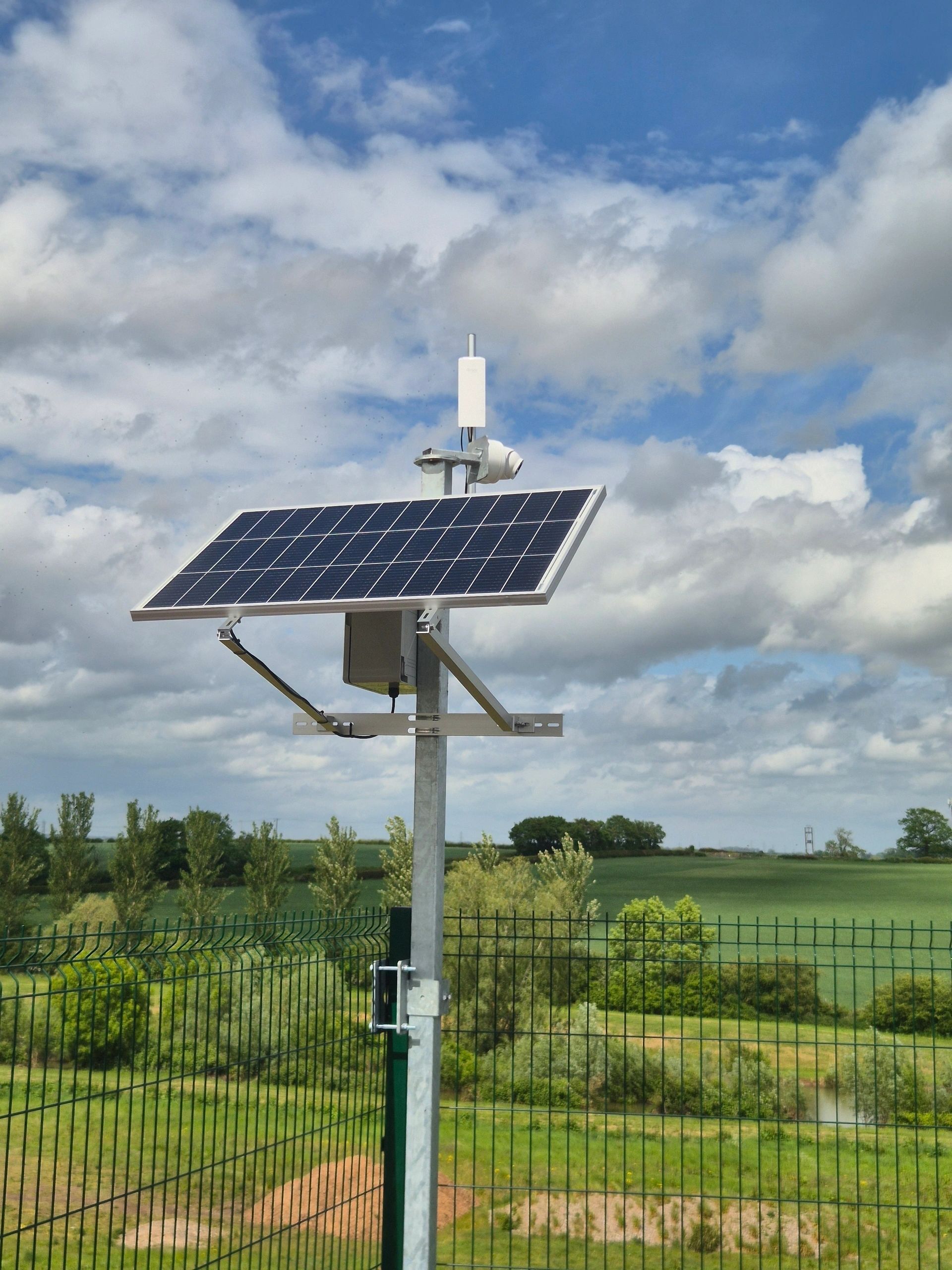
Power needs must match real camera use — A solar panel charges a battery during daylight, and the battery powers the cameras and communications equipment when sunlight is limited. A camera recording continuously, using infrared night vision and transmitting footage over a mobile connection will draw more power than a camera configured for motion recording.
The UK winter is the real test. Short days, cloud cover and low sun angles mean a system designed only around summer performance may not provide the protection expected in January. Correct panel orientation, sufficient battery storage and sensible camera settings help keep the system working through prolonged periods of poor light.
Camera placement matters more than camera quantity — The best installations focus on the areas that matter most: gates, access tracks, pedestrian entrances, fuel stores, equipment, containers and vulnerable boundaries. Height and angle also matter — cameras must be high enough to reduce the risk of interference, yet positioned to capture meaningful evidence.
Connectivity should be checked before installation — Many remote CCTV systems use a 4G or 5G mobile connection to provide remote access and send alerts. Mobile coverage can be strong on one side of a field and weak a short distance away. A signal assessment should form part of the design process.
When Solar CCTV Is the Right Choice
Solar CCTV is particularly effective where getting power to the required location would involve long cable runs, groundworks or disruption to a working site. It is commonly suited to construction sites, agricultural land, quarries, vehicle compounds, utilities infrastructure, vacant premises and temporary events.
It is not always the best option. If stable mains power is nearby, a wired system may offer greater capacity for multiple cameras and continuous recording.
Planning a System Around the Site
A proper site assessment prevents costly assumptions. It identifies the routes people and vehicles use, the assets most likely to be targeted, the available sunlight and the practical position for panels, batteries and cameras.
Before choosing a solution, establish four points: what needs protecting, the hours when the site is unattended, whether live viewing is required and how long footage needs to be retained.
Choose Security That Works When No One Is There
At Midland Security Services, we assess the risks, access, coverage and connectivity before recommending an installation built around your property or site. Contact us for a free quote and site assessment.
Explore Topics
Written by
Midland Security Services
Content creator and writer sharing insights and stories.
